
Introduction
Does your dog lick the couch, the floor, your hands, or even the air? You are not alone. This is one of the most common questions new dog owners ask.
In most cases, licking is completely normal. Dogs explore the world with their mouths and noses, much like babies use their hands. A lick can mean “I’m curious,” “I’m affectionate,” or simply “I like how this tastes.” Your dog might lick you to say hello, lick the floor after you drop a snack, or lick their paws after a walk.
But sometimes licking means something more. If your dog licks one spot over and over, licks the air for no clear reason, or seems unable to stop, it could point to stress, boredom, upset stomach, allergies, or even mild pain.
Here’s the simple rule: occasional licking is normal dog behavior. Constant, intense, or sudden licking deserves a closer look.
For example, a dog who licks your hand for a few seconds after you pet them is just being affectionate. But a dog who licks the same paw until the fur is wet or missing may be dealing with an allergy or anxiety.
In this article, you’ll learn the common reasons dogs lick everything, how to tell normal from concerning, simple steps to try at home, and when it’s time to call your veterinarian.
Dogs lick everything because it’s their natural way to explore, show affection, and self-soothe—and in most cases, it’s completely normal.
- Exploration: Dogs use their tongue like we use our hands, checking out new smells and tastes.
- Affection: Licking you often means “I trust you” or “I’m happy to see you.”
Comfort: Licking can calm a dog down, similar to how people bite their nails. - Habit or boredom: Some dogs lick surfaces simply because they’ve learned it feels good or passes the time.
- Warning sign: If licking becomes constant, targets one spot, or comes with hair loss, sores, or a change in appetite, it may signal stress, allergies, or a health issue worth checking with your vet.
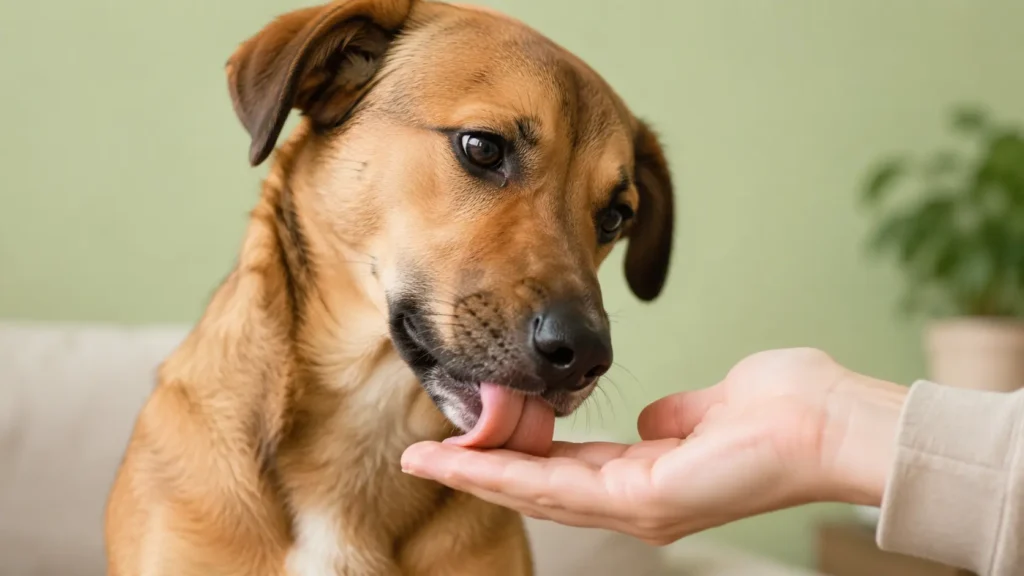
Main Reasons Behind Licking
What Does “My Dog Licks Everything” Mean?
When owners say their dog “licks everything,” they usually mean one of a few things. Maybe your dog licks the floor after every meal. Maybe they lick furniture, blankets, or even walls. Or maybe they lick you nonstop, from your hands to your face.
This phrase covers a wide range of behavior, and the meaning behind it depends on the pattern.
A dog who licks a few different things throughout the day, without seeming stressed or stuck on one spot, is usually just being a dog. Licking is one of the main ways dogs gather information about their world. Their tongue can pick up on tastes, textures, and even leftover smells from food, other animals, or people.
On the other hand, “licking everything” can also describe a more repetitive pattern. This might look like a dog who licks the same corner of the couch every day, or one who licks the air, their lips, or nearby surfaces even when nothing is there.
That kind of repeated, almost automatic licking is worth paying attention to. It does not always mean something is wrong, but it is different from casual, curious licking.
Think of it this way: occasional licking is your dog gathering information. Repetitive licking in the same spot is more often your dog managing a feeling, whether that’s mild stress, discomfort, or a habit that has stuck around.
Main Reasons Behind Why Your Dog Licks Everything
Natural curiosity:
Dogs don’t have hands, so they use their mouth and tongue to explore. A new rug, a dropped crumb, or a strange smell on your shoes can all trigger a quick lick.
Affection and bonding:
Licking you is often a sign of trust and love. Puppies lick their mothers, and this habit can carry into adulthood as a way to connect with their favorite people.
Taste and leftover smells:
Your hands, the kitchen floor, or even the couch can hold tiny traces of food or scent. Dogs have a strong sense of smell, so they may lick just to investigate further.
Stress or anxiety:
Some dogs lick to calm themselves down, similar to how a person might bite their nails. This often shows up as licking the air, furniture, or their own paws.
Boredom:
A dog without enough exercise or mental stimulation may start licking objects simply because they have nothing else to do.
Possible medical causes:
Nausea, allergies, or mouth pain can also lead to more licking than usual. If licking increases suddenly or seems paired with other symptoms, it may point to a health issue rather than a behavior habit.
Most of the time, licking fits into one of the first four categories. The medical cause is less common but worth ruling out if the behavior feels sudden or intense.
Normal Behavior vs. Concerning Behavior
Most licking falls into the “normal” category. But it helps to know the difference so you’re not caught off guard.
Normal licking usually looks like this:
- Quick licks of your hand or face when you come home.
- Licking a spot on the floor where food was dropped.
- A few licks after eating, drinking, or grooming.
- Licking that stops on its own within a minute or two.
Signs that may need closer attention:
- Licking the same spot on their body until the fur thins or the skin looks red.
- Licking the air, walls, or floor for no clear reason, over and over.
- Licking that increases during specific situations, like being left alone.
- Licking paired with vomiting, loss of appetite, or drooling.
- Licking that doesn’t stop even when you try to redirect your dog.
Here’s a simple everyday example. If your dog licks the kitchen floor right after dinner, that’s normal curiosity. But if your dog stands in the middle of the kitchen licking the air for several minutes, with no food nearby, that pattern is worth watching.
One instance of unusual licking is not a reason to panic. But if you notice a pattern repeating over days or weeks, it’s a good idea to mention it to your veterinarian at your next visit.
This chart gives you a quick gut check.
If your dog’s licking fits the left side, casual, short, tied to food or affection, you can relax. It’s normal dog behavior.
If it fits the right side, repeated, aimed at nothing in particular, or paired with skin or stomach issues, it’s a good idea to bring it up with your veterinarian. Catching a pattern early is easier than waiting for it to get worse.
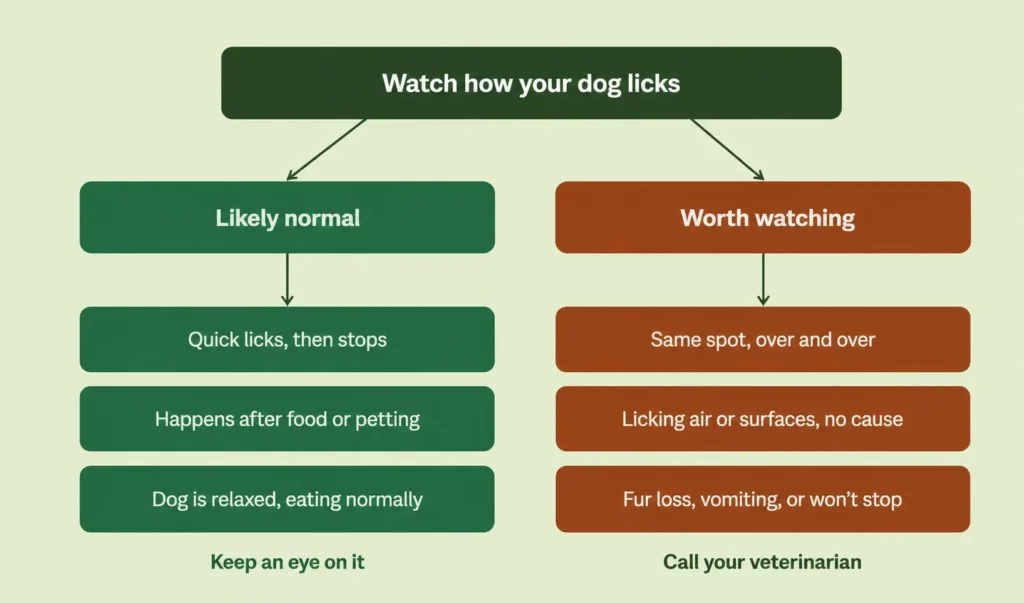
Behavior vs. Concerning Behavior
When Should You Ignore This Behavior?
Not every lick needs a response. In fact, reacting to every single one can sometimes make things worse.
If your dog gives a quick lick to your hand, the floor, or a toy, you can simply let it happen. This kind of licking is a normal part of how dogs experience the world. There’s no need to correct it or worry about it.
It’s also fine to ignore licking that happens in short bursts, like after your dog eats, drinks water, or finishes playing. These are just everyday moments of curiosity or comfort.
Here’s a helpful way to think about it: if the licking doesn’t disrupt your dog’s daily life, sleep, or eating habits, and it doesn’t leave marks on their skin, it’s usually safe to let it go.
One more thing worth knowing. If you make a big deal out of every lick, some dogs learn that licking gets your attention, even if that attention is you saying “no.” This can accidentally turn a harmless habit into a repeated one.
For example, if your dog licks your hand and you laugh, pull away, or talk to them right away, they may repeat the behavior just to get that reaction again.
So, if the licking is light, occasional, and doesn’t seem to bother your dog, it’s okay to simply move on with your day.
When should you reward or respond to it?
Some licking is worth a gentle response, not because it’s bad, but because it’s a good moment to guide your dog toward a calmer habit.
If your dog licks you when they’re excited or overstimulated, like when guests arrive, you can redirect them to a toy or a quick sit. Reward the calmer behavior instead. This teaches your dog that calm gets attention too, not just licking.
If your dog licks a surface repeatedly out of boredom, that’s a signal to step in. Offer a chew toy, a short walk, or a quick training game. Reward them when they engage with that instead of the floor or furniture.
For example, if your dog licks the same spot on the rug every afternoon, try adding a 10-minute play session around that time. If the licking stops, boredom was likely the cause.
You can also respond by gently interrupting the behavior with a cue like “leave it,” followed by praise when your dog stops. This works well for mild, habit-based licking.
The goal isn’t to punish licking. It’s to give your dog a better option and reward them for choosing it.
If you try these steps for a couple of weeks and the licking doesn’t change, or it seems tied to stress or anxiety, a certified dog trainer or veterinary behaviorist can help you dig deeper.
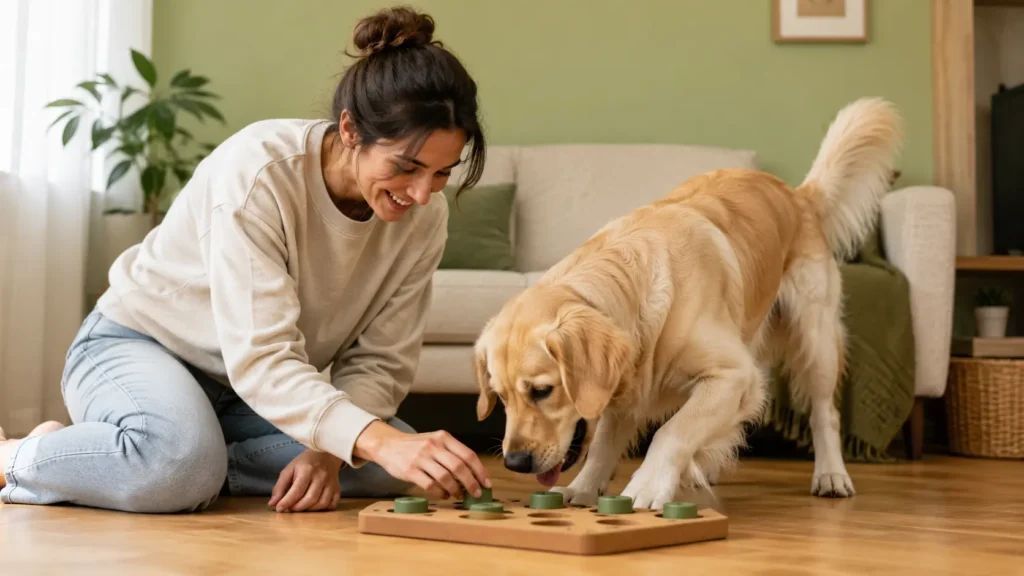
Practical Steps to Reduce Excessive Behavior
Practical steps to reduce excessive licking without hurting your bond
If your dog’s licking has become a habit you’d like to change, small, consistent steps work best.
Add more mental stimulation:
Puzzle toys, sniff walks, and short training sessions can reduce boredom-based licking. A tired brain is often a calmer one.
Stick to a routine:
Dogs feel more relaxed when meals, walks, and bedtime happen around the same time each day. Less uncertainty often means less stress-driven licking.
Redirect, don’t scold:
When you notice your dog starting to lick a surface, calmly guide them to a chew toy or a short activity. This teaches a new habit instead of just stopping the old one.
Check their environment:
A dog left alone for long hours, or one who doesn’t get enough exercise, may lick more out of restlessness. Even 20 extra minutes of activity a day can help.
Rule out itchy or dry skin:
If your dog licks their paws a lot, ask your vet about allergies or dry skin, since these are common and treatable.
Avoid punishment:
Yelling or pushing your dog away can increase anxiety, which often makes licking worse, not better.
For example, if your dog licks the same corner of the couch every evening, try a 10-minute play session at that time for a week. If the licking fades, boredom was likely the reason.
Small changes, done consistently, usually bring the biggest results.

Age-specific advice for puppies, adult dogs, and senior dogs
A dog’s age can shape why they lick and what to watch for.
Puppies:
Licking is a big part of how puppies learn. They lick hands, toys, and floors to explore new textures and tastes. This is normal and usually fades as they grow and find other ways to investigate the world, like chewing or sniffing. For example, a puppy licking your fingers after a walk is likely just curious, not concerned about anything.
Adult dogs:
By adulthood, licking often becomes tied to habit, comfort, or environment. An adult dog who suddenly licks more than usual may be reacting to a change, like a new pet, a move, or a shift in routine. This is a good age to watch for patterns, since adult dogs are better at showing consistent behavior you can track over time.
Senior dogs:
Older dogs may lick more due to joint discomfort, dental issues, or skin changes that come with age. A senior dog licking their paws or legs more than before could be pointing to arthritis pain or dry skin, both common in older dogs. Since senior dogs also face a higher risk of underlying health conditions, new or increased licking is worth mentioning at their next vet visit, even if it seems minor.
Across all ages, sudden changes in licking are more meaningful than the licking itself.
Breed and individual personality differences
Not all dogs lick the same amount, and breed can play a role.
Retrievers, like Labradors and Golden Retrievers, were bred to carry things gently in their mouths. This can carry over into more mouth-focused habits, including licking hands, toys, and furniture. It doesn’t mean anything is wrong. It’s simply part of how these breeds naturally interact with the world.
Breeds known for being more anxious or sensitive to routine, like some herding breeds, may lick more during stressful moments, such as thunderstorms or being left alone.
Personality matters just as much as breed. Some dogs are naturally more oral, exploring the world mouth-first from puppyhood, while their littermates barely lick at all. Neither is wrong. It’s simply a personal trait, similar to how some people talk with their hands more than others.
For example, in a two-dog household, one dog might lick every new guest’s hand, while the other sniffs once and walks away. Both are healthy responses. They just reflect different personalities.
The key isn’t comparing your dog to others. It’s noticing what’s normal for your dog specifically. A sudden change from their usual pattern matters more than how much they lick compared to another dog or breed.
Real-life owner examples and reported solutions
Many first-time dog owners share similar stories about licking, and looking at a few can help you feel less alone.
The floor licker:
One common story involves a dog who licks the kitchen floor constantly, even when it’s clean. Owners often find this improves once they start sweeping right after meals and wiping up minor spills. This lines up with the idea that dogs are drawn to leftover food smells, not just visible crumbs.
The stress licker:
Another frequent example is a dog who licks the air or a blanket during car rides or vet visits. Owners often report that a familiar blanket, calm voice, and short practice trips help reduce this over time. This fits with licking as a self-soothing behavior during stressful moments.
The paw licker:
Some owners describe a dog who licks one paw repeatedly after walks. In many cases, this turned out to be related to seasonal allergies or walking on hot pavement, and it improved after a vet visit and paw rinses.
A note of caution:
solutions shared by other owners can be a helpful starting point, but they aren’t a diagnosis. What worked for one dog may not fit yours, especially if the licking is tied to a medical issue. If a home fix doesn’t help within a couple of weeks, a veterinarian can confirm what’s really going on.
Myth vs. fact
There’s a lot of mixed information about why dogs lick. Here’s what’s actually true.
Myth: A dog’s mouth is cleaner than a human’s:
Fact: This isn’t true. A dog’s mouth carries its own bacteria, different from ours, not fewer germs. It’s a good reason to wash your hands after a lot of licking, especially around cuts or your face.
Myth: Dogs only lick you to show affection:
Fact: Affection is one reason, but not the only one. Dogs also lick to explore, self-soothe, or respond to taste and smell. Assuming it’s always love can cause owners to miss signs of stress or discomfort.
Myth: Licking themselves is always just grooming:
Fact: Dogs do groom themselves, but repeated licking of one spot, especially a paw or leg, can point to allergies, anxiety, or pain instead of normal cleaning.
Myth: If a dog is licking, it means something is wrong:
Fact: Most licking is completely normal. Occasional licking of people, floors, or toys is simply part of being a dog, not a red flag.
Myth: You should always stop your dog from licking:
Fact: Light, occasional licking doesn’t need to be corrected. Only frequent, intense, or injury-causing licking calls for a closer look or a vet visit.
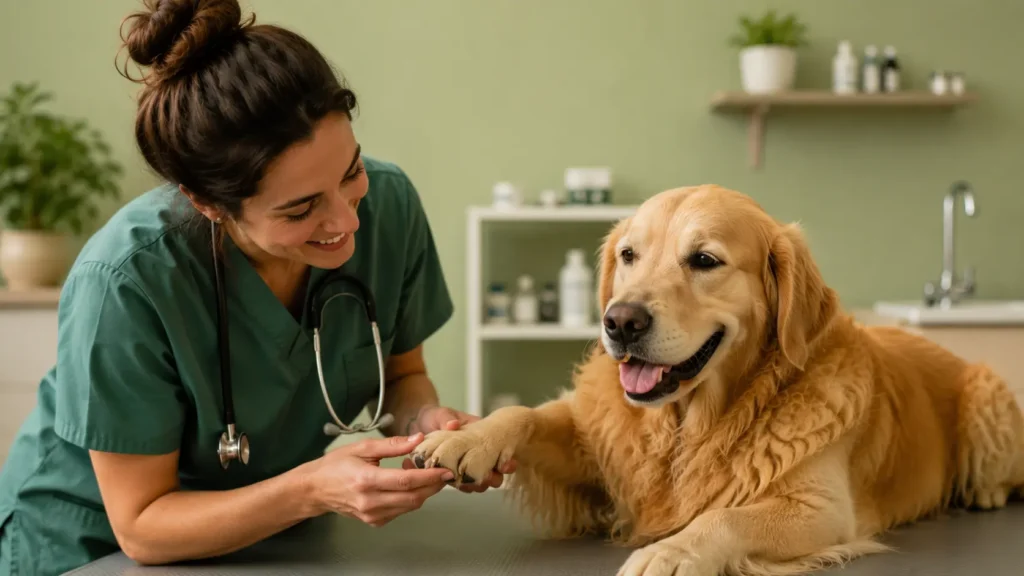
MedicalBehavioral Problem (Vet Trust Visual)
When it may signal a medical or behavioral problem
While most licking is harmless, there are times when it points to something that needs attention.
Possible medical signs:
- Licking one area until the fur thins, or the skin looks red or raw.
- Licking paws constantly, especially after walks.
- Sudden increase in licking with no clear cause.
- Licking paired with vomiting, drooling, or loss of appetite.
- Bad breath along with more frequent licking, which can point to dental pain.
Possible behavioral signs:
- Licking that only happens during specific triggers, like being left alone or hearing loud noises.
- Licking that seems automatic, like your dog can’t stop even when distracted.
- Licking that increases during times of change, such as a move or a new pet in the home.
Here’s a simple way to think about it. A dog who licks their paw a few times after a walk is probably just cleaning off dirt. A dog who licks the same paw for 20 minutes straight, every day, may be dealing with allergies, anxiety, or discomfort that’s worth checking out.
Neither of these situations means something is seriously wrong. They simply mean it’s time to get more information, either from your veterinarian for physical causes or a certified trainer or veterinary behaviorist for stress-related licking.
Catching patterns early usually leads to simpler solutions.
Sudden behavior changes
A sudden change in licking is more meaningful than the licking itself.
If your dog has always been a light, occasional licker and suddenly starts licking constantly, pay attention. Sudden changes often point to something specific, whether that’s a new stressor, an injury, or a health issue that just started.
For example, if your dog begins licking one paw heavily after weeks of never doing it, think about what changed recently. Did they start a new medication? Walk on hot pavement? Get stung by something? A clear starting point can help you and your vet narrow down the cause.
The same goes for behavior. A dog who suddenly licks the air, walls, or furniture after being calm for years may be responding to new anxiety, discomfort, or even nausea.
You don’t need to panic over one new instance. But if a sudden change lasts more than a few days, or shows up alongside other symptoms, it’s worth a call to your veterinarian.
Pain or physical discomfort
Sometimes licking is your dog’s way of pointing to a spot that hurts.
Dogs can’t tell you where something feels off, so they often lick the area instead. This is especially common with joint pain, an old injury, or a healing wound.
For example, a dog with early arthritis may lick a specific leg or paw more than the others, especially after resting or waking up. This kind of licking often shows up gradually, not all at once.
Mouth or dental pain can also lead to more licking of the lips or nearby surfaces, since dogs may be trying to soothe the discomfort in their own way.
Watch for licking that focuses on one exact area, along with limping, stiffness, sensitivity to touch, or reluctance to jump or climb stairs.
If you notice your dog licking the same spot repeatedly, especially paired with any of these signs, it’s a good idea to have your veterinarian take a look. Pain-related licking usually gets better once the underlying cause is treated.
Vision or hearing changes
As dogs lose some vision or hearing, especially with age, they often rely more on their nose and mouth to understand the world around them. This can sometimes lead to more licking of objects, furniture, or even the air.
A dog with reduced eyesight may lick a new object more than usual, essentially double-checking what it is since they can’t see it as clearly. Similarly, a dog with hearing loss may seem more startled or anxious in general, and increased licking can be part of that stress response.
For example, a senior dog who bumps into furniture more often and also starts licking walls or corners may be adjusting to vision changes, not developing a random new habit.
These changes are common as dogs age and aren’t something to fear. But if you notice new licking alongside signs like bumping into things, not responding to their name, or seeming disoriented, it’s worth scheduling a vet visit. A vet can check their eyes and ears and help you support your dog through the transition.
Cognitive dysfunction in senior dogs
In older dogs, repetitive licking can sometimes be linked to canine cognitive dysfunction, a condition similar to dementia in people.
This condition can affect memory, awareness, and normal habits, including licking. Dogs with cognitive changes may lick the air, a wall, or the same spot on furniture without any clear trigger, almost like the behavior runs on autopilot.
- Other common signs of cognitive dysfunction include:
- Seeming confused or disoriented in familiar spaces.
- Pacing or staring at walls.
- Changes in sleep, like being awake more at night.
- Less interest in play or family interaction.
For example, a senior dog who starts licking the same corner of a room every night, along with pacing before bed, may be showing early signs of cognitive changes rather than a simple habit.
This can feel worrying to notice, but it’s a manageable part of aging for many dogs. If you see repetitive licking along with any of these other signs, your veterinarian can evaluate your dog and talk with you about ways to support their comfort and quality of life.
Seizures or neurological warning signs
In rare cases, extreme or unusual licking can be linked to a neurological issue, including a condition sometimes called fly-biting syndrome, where dogs snap or lick at the air as if chasing invisible flies.
This is different from normal licking. It often looks repetitive, intense, and disconnected from anything happening around your dog. Some cases are linked to partial seizures, while others may involve gastrointestinal discomfort or other underlying issues.
- Signs that may point to a neurological cause include:
- Licking or snapping at the air with a glazed or distant look.
- Episodes that seem to come out of nowhere.
- Brief moments of unresponsiveness during the behavior.
- Drooling, stiffness, or disorientation around the same time.
For example, a dog who suddenly stares at nothing while licking the air, then returns to normal a few seconds later, is showing a pattern worth documenting.
This is uncommon, so there’s no need to assume the worst. But if you notice this type of licking, it’s a good idea to record a short video and share it with your veterinarian. It can help them understand what’s happening and guide the next steps.
Quick checklist before calling a vet or trainer
Before you reach out for help, a little observation can go a long way. Try tracking these details for a few days.
Note the pattern:
- When does the licking happen? (Certain times, situations, or triggers).
- How long does each episode last?.
- Does it stop on its own, or does your dog seem unable to stop?.
Check the target:
- Is your dog licking one specific spot on their body, an object, or the air?.
- Has that area changed color, lost fur, or developed a sore?.
Watch for other symptoms:
- Vomiting, diarrhea, or changes in appetite.
- Limping, stiffness, or sensitivity when touched.
- Signs of confusion, disorientation, or staring spells.
- Increased scratching along with the licking.
Think about recent changes:
- New food, medication, or treats.
- A move, new pet, or change in routine.
- Recent injury, vet visit, or grooming appointment.
For example, if you notice your dog only licks their paw after walks near a specific park, that detail alone can help your vet or trainer narrow down whether it’s allergies, irritation, or something else.
If the licking is mild, occasional, and your dog seems otherwise happy and healthy, you likely don’t need to worry. But if you notice several items on this list happening together, it’s a good time to schedule a visit. Bringing this information with you helps your vet or trainer get to the answer faster.
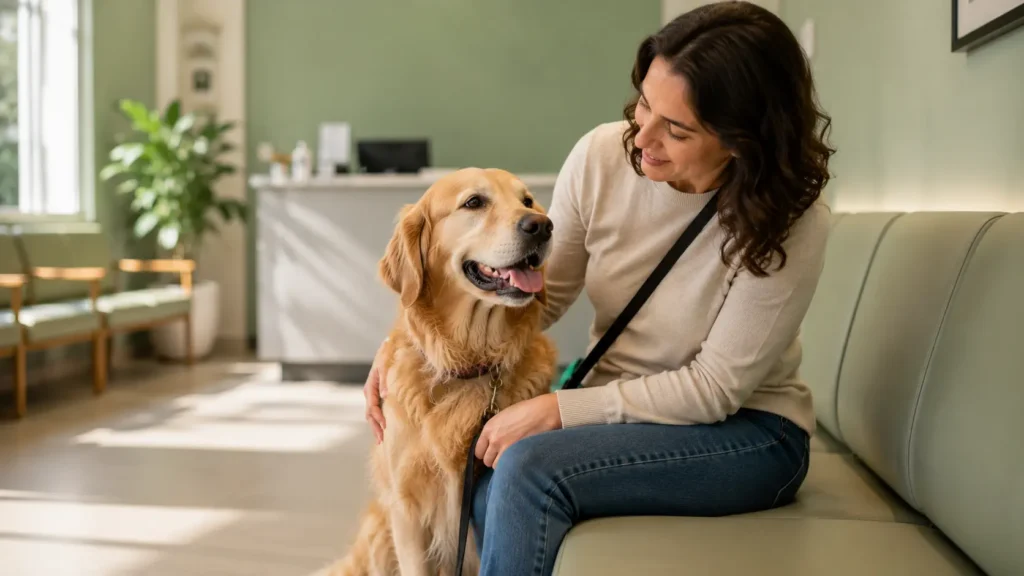
When to Contact a Veterinarian or Trainer
When to contact a veterinarian or professional dog trainer
Knowing who to call can save you time and worry.
Contact your veterinarian if:
Licking targets one area, especially with fur loss, redness, or a sore
Your dog is also vomiting, has diarrhea, or has lost interest in food
Licking started suddenly with no clear reason
You notice limping, stiffness, or sensitivity in the area they’re licking
Your dog seems disoriented, stares blankly, or has episodes of unresponsiveness
Licking increases along with signs of aging, like confusion or changed sleep habits
A veterinarian can check for pain, allergies, dental issues, or other medical causes that might be driving the behavior.
Contact a certified dog trainer or veterinary behaviorist if:
Your dog’s medical checkup comes back clear, but the licking continues
Licking happens mainly during specific triggers, like being alone, loud noises, or new visitors
The behavior seems tied to stress or anxiety rather than a physical cause
You want guidance on redirecting the habit without harming your bond with your dog
For example, if your vet rules out a medical cause for repetitive floor licking, a trainer can help you build a plan using enrichment and redirection instead of guesswork.
There’s no need to choose one or the other. Many owners start with a vet visit to rule out health issues, then bring in a trainer if the behavior continues. Getting the right support early usually makes the process easier for both of you.
Frequently asked questions
Why does my dog lick everything all of a sudden?
A sudden increase in licking often points to a specific trigger, like a new stressor, an injury, nausea, or a change in routine. If it starts out of nowhere and continues for more than a few days, it’s worth mentioning to your vet.
Is it normal for dogs to lick furniture or walls?
Occasional licking of furniture or walls can be normal, especially if your dog is investigating a new smell. But repeated licking of the same spot, with no clear reason, can point to boredom, stress, or an upset stomach.
Why does my dog lick the floor so much?
Most of the time, this comes down to leftover food smells or spills your dog picks up on, even ones you can’t see. Sweeping and wiping the floor after meals often helps.
Should I stop my dog from licking me?
Not necessarily. Light, occasional licking is a normal way dogs show affection or curiosity. You only need to redirect it if it becomes excessive, feels compulsive, or bothers you.
Can allergies cause excessive licking?
Yes. Allergies are a common reason dogs lick their paws or skin more than usual. If you notice redness, chewing, or hair loss along with the licking, a vet visit can help confirm the cause.
When should I worry about my dog’s licking?
Worry less about occasional licking and more about sudden changes, one-spot licking, or licking paired with other symptoms like vomiting, limping, or confusion.
Key takeaways:
- Licking is one of the main ways dogs explore the world, show affection, and calm themselves down. Most of the time, it’s completely normal.
- Common reasons include curiosity, bonding, leftover tastes and smells, boredom, and mild stress.
- Watch for patterns, not single moments. One quick lick means little, but repeated licking of the same spot, or licking with no clear cause, is worth noting.
- Sudden changes matter more than the amount. A dog who starts licking heavily out of nowhere is giving you useful information.
- Some licking points to a medical issue, like allergies, dental pain, joint discomfort, or in rare cases, a neurological condition.
- Age plays a role. Puppies lick to learn, adult dogs often lick out of habit or environment, and senior dogs may lick due to joint pain, vision changes, or cognitive shifts.
- Redirecting your dog toward toys, activities, or training cues works better than scolding, and helps protect your bond.
- For example, a dog who licks the same corner of the couch every evening may simply need more playtime around that time of day.
- When in doubt, a veterinarian can rule out physical causes, while a certified trainer or veterinary behaviorist can help with stress-related habits.
Most licking is simply your dog being a dog. Paying attention to changes helps you know when it’s time to look a little closer.
Final thoughts
If your dog licks everything in sight, take a breath. In most cases, this is simply how dogs experience their world, one taste and one sniff at a time.
The goal isn’t to stop licking altogether. It’s to understand your own dog’s normal, so you can notice when something shifts. A dog who gives quick, casual licks throughout the day is likely just being curious or affectionate. A dog who fixates on one spot, licks without any clear reason, or shows other symptoms alongside it is giving you a signal worth paying attention to.
For example, if your dog has always licked your hand when you get home, that’s simply part of who they are. But if that same dog suddenly starts licking their paw raw, that’s a change worth looking into.
You don’t need to have all the answers today. Start by watching for patterns, ruling out easy fixes like boredom or leftover food smells, and reaching out to your veterinarian or a certified trainer if something feels off.
Most of the time, licking is just your dog’s way of interacting with the world around them. And now, you’re better equipped to tell the difference between “just being a dog” and “something to look into.”

