

Introduction
If you’ve caught your dog staring at you again — maybe from across the room, or just inches from your face — you’re probably wondering what’s going on in that furry head. The good news? In most cases, this is completely normal.
Dogs stare at their owners for a lot of reasons. They might want food, a walk, or just your attention. They could be reading your body language, waiting for a cue, or simply showing affection. Believe it or not, dogs and humans release oxytocin (the “love hormone”) when they make eye contact — similar to what happens between parents and babies.
So most of the time, that intense gaze is just your dog’s way of connecting with you.
That said, staring isn’t always about love. Sometimes it’s a sign your dog needs something, like a bathroom break or dinner. Other times, especially if the stare comes with stiff body language, growling, or comes right before a reaction to something, it could signal stress or discomfort.
For example, a dog staring softly while lying near your feet is very different from a dog staring rigidly with a tense body near their food bowl.
In this article, we’ll cover the most common reasons dogs stare, how to tell normal from concerning behavior, and simple steps you can take — plus when it’s worth calling your vet or a trainer.
Quick Answer
Why Does My Dog Always Stare at Me?
Dogs stare at their owners because they want something, feel bonded to them,
or are reading human body language for cues. This is usually completely
normal and can even be a sign of a strong relationship between you and your dog.
Your dog may be asking for food, a walk, playtime, or attention.
Gentle eye contact can support bonding and may release oxytocin in both you and your dog.
Dogs learn to read your movements, facial expressions, habits, and daily routines.
Many dogs look at their owner for reassurance, especially in unfamiliar places or situations.
A stiff body, hard stare, pinned ears, tucked tail, raised fur, or growling
can signal fear, stress, guarding, or discomfort. Give your dog space and
avoid forcing eye contact.
Is It Normal for Dogs to Stare at You?
Yes, staring is a normal part of how dogs communicate. Unlike humans, dogs don’t have words, so they rely on body language and eye contact to “talk” to us.
Puppies and adult dogs both learn early on that watching you closely gets results. A stare might earn them a treat, a walk, or a scratch behind the ears. Over time, this becomes a habit because it works.
Staring is also part of how dogs bond with people. Research on human-dog relationships has shown that mutual eye contact can trigger a rise in oxytocin, the same hormone involved in parent-child bonding. This is one reason a relaxed, soft stare often means your dog feels safe and connected to you.
Here’s a simple everyday example: you’re eating dinner, and your dog sits a few feet away, watching your every bite. That’s not misbehavior. It’s your dog hoping you’ll share, based on things that may have happened before.
So in most everyday situations, a staring dog is simply an attentive, bonded dog. It becomes worth paying closer attention to only when the staring is paired with stiff body language, growling, or happens right before a reaction like snapping or lunging. We’ll cover those signs in more detail later in this article.
Main Reasons Your Dog Stares at You
They want something:
Food, water, a walk, or a toy — dogs quickly learn that staring at you gets your attention. If your dog stares at you, then glances at the door or their leash, they’re probably telling you what they want.
They’re showing affection:
Sometimes a stare is just love. A soft, relaxed gaze while your dog is lying near you usually means they feel calm and connected.
They’re reading your body language:
Dogs are experts at watching human faces and movements. They pick up on tone of voice, posture, and routines. A stare might just be your dog trying to figure out what happens next.
They’re checking in with you:
This is common in new places or during training. Your dog looks to you for guidance or reassurance, kind of like glancing at a friend before trying something new.
They’re waiting for a cue:
If you’ve trained your dog with commands, they may stare simply because they’re expecting one. This is especially common right before mealtime or a walk.
Everyday example: You pick up your keys, and your dog immediately locks eyes with you. That’s not confusion — it’s your dog connecting the sound of keys with “we’re going somewhere.”
Most of these reasons are harmless and even show a strong bond between you and your dog.

Your Dog Feels Safe Around You
A relaxed stare is often a sign of trust. When your dog feels safe, they naturally want to be near you and keep an eye on you.
This kind of staring usually comes with loose, comfortable body language. Your dog’s mouth may look soft and slightly open, their body relaxed, and their tail resting naturally or wagging gently.
Dogs also use their owners as a “home base,” especially in unfamiliar situations. If you’ve ever taken your dog somewhere new, like a park or a friend’s house, you may have noticed them glancing back at you often. That’s your dog checking in, not because something is wrong, but because you make them feel secure.
Everyday example: Your dog lies on the floor a few feet away, watching you work at your desk. No stiffness, no tension, just quiet company. That’s a classic sign of a calm, trusting dog.
This type of staring is completely normal and is actually a good sign of a healthy bond between you and your dog.
Your Dog Enjoys Your Company
Sometimes staring is simply your dog’s way of saying, “I like being near you.” Dogs are social animals, and many genuinely enjoy watching the people they love.
This kind of staring often happens during quiet, everyday moments. Maybe you’re reading, cooking, or watching TV, and you notice your dog just… watching you. There’s no urgency to it. Their body stays loose and calm.
Some dogs also stare more during moments of connection, like after a good walk, during belly rubs, or right after playtime. It’s their way of soaking up your attention a little longer.
Everyday example: You sit down on the couch after a long day, and your dog hops up beside you, resting their head on your leg while gazing up at you. That gentle, steady eye contact is usually your dog simply enjoying being close to you.
This type of staring is a good thing. It reflects comfort, affection, and companionship, not a problem that needs fixing. Many owners actually describe this as one of the sweetest parts of having a dog.

Your Dog Wants Food, Treats, Play, or Attention
Sometimes the reason is simple: your dog wants something, and staring is how they ask for it.
Dogs quickly learn that a steady gaze gets a response. Maybe it earned them a treat once, or maybe staring at you near the door always leads to a walk. Once they realize staring works, they’ll keep doing it.
This kind of staring often comes with other clues. Your dog might nudge your hand, whine softly, tilt their head, or glance back and forth between you and what they want, like their food bowl or a toy on the floor.
Everyday example: You’re cooking dinner, and your dog sits perfectly still a few feet away, eyes locked on you. The moment you glance down, their tail starts wagging. That’s a clear sign they’re hoping for a bite.
This type of staring is completely normal dog behavior. It’s not demanding or disrespectful. It’s simply your dog communicating in the most natural way they know how.
Your Dog Is Reading Your Body Language
Dogs are surprisingly good at reading people. Since they don’t understand most of what we say, they rely on our faces, posture, and movements to figure out what’s happening.
Your dog may be watching your hands to see if you’re about to grab a leash. They might be studying your posture to guess if you’re getting up, sitting down, or heading toward the kitchen. Even small habits, like reaching for your shoes or picking up your phone, can become signals your dog learns to recognize over time.
This is one reason dogs seem to “know” what you’re about to do before you do it. They’ve simply learned your patterns.
Everyday example: You stretch and yawn on the couch, and your dog immediately jumps up, expecting a walk. They’re not guessing randomly. They’ve connected that stretch with what usually happens next.
This kind of staring is a normal and pretty impressive skill. It shows how closely dogs pay attention to the people they live with every day.
Your Dog Is Waiting for Your Next Move
Dogs are creatures of habit, and they pay close attention to routines. Often, a stare simply means your dog is waiting to see what you’ll do next.
This is especially common around mealtimes, walks, or training sessions. If you’ve ever practiced commands like “sit” or “stay,” your dog may stare at you out of habit, expecting direction or a reward.
This type of staring is usually calm and patient rather than urgent. Your dog isn’t anxious. They’re simply paying attention, almost like they’re saying, “I’m ready whenever you are.”
Everyday example: You stand by the pantry where treats are kept, and your dog sits nearby, eyes fixed on you, waiting quietly to see if a treat is coming. There’s no whining or pacing, just patient watching.
This kind of behavior is completely normal, especially in dogs who are food-motivated or have been through basic training. It shows your dog is engaged and paying attention, which is actually a helpful trait during training and daily routines.
Your Dog May Be Bored or Under-Stimulated
Sometimes staring isn’t about affection or food. It’s your dog telling you they’re bored and looking for something to do.
Dogs need regular exercise, mental stimulation, and social interaction. When these needs aren’t met, some dogs turn to staring as a way to get you moving, hoping you’ll offer a walk, a toy, or some playtime.
This type of staring often comes with restlessness. Your dog might pace, follow you from room to room, paw at you, or bring you a toy along with the stare.
Everyday example: It’s a rainy day, and your dog hasn’t had their usual walk. Instead of settling down, they sit in front of you, staring intently, then nudge a toy toward your feet. That’s a pretty clear request for activity.
This kind of staring isn’t harmful, but it’s worth paying attention to. If it happens often, your dog may need more daily exercise or enrichment, like puzzle toys, sniff games, or extra playtime, to feel satisfied and relaxed.
Anxiety or Insecurity May Be Involved
For some dogs, staring is a sign of worry rather than affection. This is more common in dogs who are naturally anxious, recently rescued, or going through a big change, like moving to a new home.
Anxious staring often looks different from relaxed staring. Instead of a soft, calm gaze, you might notice a tense body, tucked tail, lowered head, or pacing along with the stare. Some dogs also follow their owner from room to room, seeming unable to settle unless they can see them.
This behavior usually reflects a need for reassurance, not defiance or a “problem dog.” Dogs who feel unsure about their environment often look to their owner as a source of safety.
Everyday example: After a move to a new apartment, a dog may stay glued to their owner’s side, staring anxiously and refusing to relax in another room, even briefly.
This kind of staring is worth noticing, though not something to panic about. Building predictable routines, offering a safe resting spot, and gradual confidence-building exercises can help. If anxiety seems severe or constant, a professional trainer or veterinary behaviorist can help pinpoint the cause.
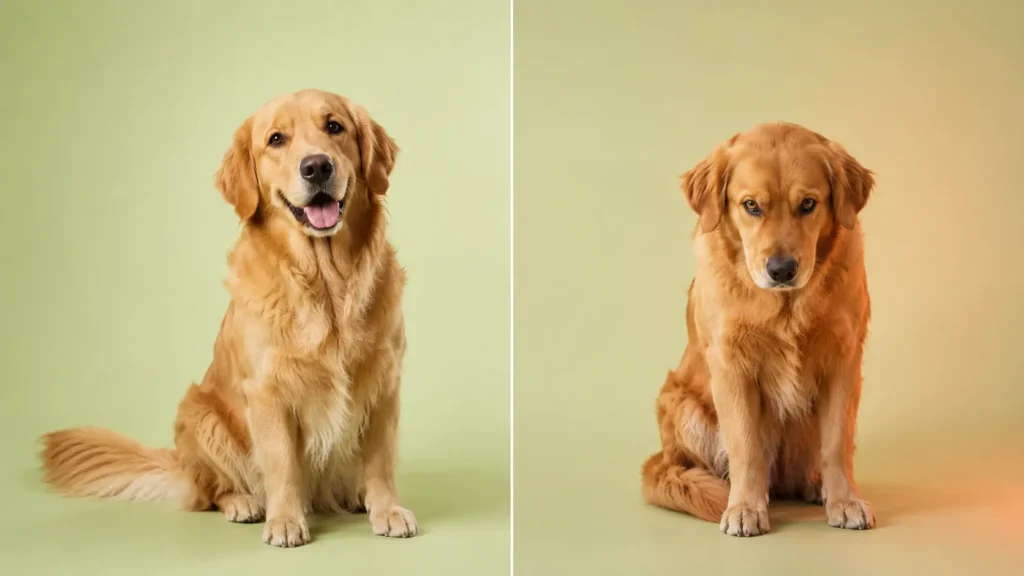
How Body Language Changes the Meaning of a Dog’s Stare
A stare on its own doesn’t tell the whole story. To understand what your dog really means, you need to look at their entire body, not just their eyes.
A relaxed, friendly stare usually comes with soft eyes, a loose body, a gently wagging tail, and a relaxed mouth that may look slightly open. This kind of stare often means your dog feels happy, curious, or affectionate.
A tense or concerning stare looks very different. Watch for a stiff or frozen body, a tucked or raised tail, ears pinned back or pushed forward, lip licking, yawning outside of tiredness, or a hard, unblinking gaze. These signals can point to stress, fear, or discomfort.
Everyday example: A dog staring at a stranger with a wagging tail and wiggly body is simply curious. A dog staring at that same stranger with a stiff body, tucked tail, and unblinking eyes is showing signs of stress.
Learning to read these small differences can help you respond appropriately. A relaxed stare usually needs no action at all. A tense stare is a signal to give your dog space, remove them from the situation, or redirect their attention calmly.
Paying attention to the whole picture, not just the eyes, is one of the best ways to understand what your dog is really trying to tell you.
Reason, Body Language, Meaning, and What to Do
Here’s a quick reference to help you match your dog’s stare to what’s
likely going on, based on the body language that goes along with it.
| Reason | Body Language | Meaning | What to Do |
|---|---|---|---|
|
Wants food or a walk |
Soft eyes, wagging tail, and may glance at the door or food bowl. |
Asking for something |
Meet the need if reasonable, or redirect your dog calmly. |
|
Bonding or affection |
Relaxed body, soft blinking, and calm breathing. |
Feels connected and safe |
Enjoy the moment. No action is usually needed. |
|
Reading your cues |
Alert but relaxed, with ears naturally facing forward. |
Watching for patterns or routines |
Nothing is needed. This is normal attentiveness. |
|
Boredom |
Restlessness, pacing, nudging, or bringing toys to you. |
Needs more activity |
Add exercise, playtime, training games, or puzzle toys. |
|
Anxiety or insecurity |
Tense body, tucked tail, pacing, clinginess, or repeated checking. |
Feeling unsure or unsafe |
Offer reassurance, create a predictable routine, and consider professional training support. |
|
Stress or discomfort |
Stiff body, hard stare, pinned ears, lip licking, freezing, or growling. |
Possible fear or warning sign |
Give your dog space, avoid punishment, and consult a qualified professional if the behaviour happens frequently. |
If your dog stares at you with a loose, wiggly body while standing near
the leash, they’re probably excited for a walk. If that same stare comes
with a stiff body near a stranger, it may mean something very different.
Normal Behavior vs Concerning Behavior
Most staring falls into the “normal” category. Knowing the difference can help you feel confident instead of worried.
Normal staring usually looks like this:
- Soft, relaxed eyes
- Loose body and wagging tail
- Happens around meals, walks, or playtime
- Stops easily when you talk to or touch your dog
- No growling, stiffness, or aggressive posture
Concerning staring may include:
- A stiff, frozen body
- Hard, unblinking eyes
- Growling, snarling, or bared teeth
- Staring paired with guarding food, toys, or space
- Staring right before snapping, lunging, or biting
- Sudden onset of intense staring with no clear cause
Everyday example: A dog staring at you while wagging their tail near the food bowl is likely hoping for a treat. A dog staring at you with a stiff body, unmoving tail, and low growl while standing over their bowl is guarding it, which is a different situation entirely.
If you notice the concerning signs, especially around food, toys, or specific people, it’s worth taking seriously without panicking. These behaviors are often manageable with consistent training and management.
If the staring is sudden, intense, paired with aggression, or seems out of character for your dog, it’s a good idea to talk to your veterinarian first to rule out pain or illness, then consult a certified professional trainer or veterinary behaviorist for guidance.

Decision Chart: Normal vs Concerning Signs
If you’re not sure what your dog’s stare means, this simple step-by-step chart can help.
Step 1: Check the body.
Is your dog’s body loose and relaxed, or stiff and frozen?
- Loose → likely normal
- Stiff → move to Step 2
Step 2: Check the tail.
Is the tail wagging or resting naturally, or is it tucked, raised, or still?
- Relaxed tail → likely normal
- Tucked or rigid tail → move to Step 3
Step 3: Check for sounds or extra signals.
Is your dog growling, showing teeth, or guarding food, toys, or space?
- No → probably just intense focus or excitement
- Yes → treat this as a concerning sign
Step 4: Check when it happens.
Did the staring start suddenly, with no clear reason, or does it happen constantly throughout the day?
- Sudden or constant with no obvious trigger → consider a vet visit to rule out pain or illness
- Happens around known triggers, like food or strangers → a certified trainer or behaviorist can help
Everyday example: A dog staring at a squirrel with a loose body and wagging tail is just excited. A dog staring at a family member with a stiff body and low growl needs a closer look.
Use this chart as a quick guide, not a diagnosis. When in doubt, a professional can help you understand exactly what your dog needs.
When Should You Ignore This Behavior?
Not every stare needs a response, and that’s actually a good thing to know. Constantly reacting to every look can accidentally teach your dog that staring always gets attention, even when it’s not necessary.
If your dog stares at you with a relaxed body simply because they enjoy your company, it’s perfectly fine to ignore it. This kind of staring doesn’t need to be corrected or redirected. Your dog isn’t asking for anything urgent. They’re just being close to you.
It’s also fine to ignore staring that happens because your dog wants something outside of appropriate times, like begging for food at the table or demanding play during work hours. Calmly ignoring the stare, without yelling or eye contact, teaches your dog that staring won’t always get instant results.
Everyday example: If your dog sits and stares at you every time you sit down to eat, calmly turning away and not offering food teaches them that staring doesn’t guarantee a snack.
The key is context. Relaxed, harmless staring can usually be ignored without any concern. It only becomes something to address when it’s paired with stress signals, guarding behavior, or shows up alongside anxiety, which we’ll cover next.
When Should You Reward or Respond to It?
Some staring is worth responding to, especially when it’s your dog’s polite way of communicating a real need.
If your dog stares calmly at their leash, water bowl, or the door, they’re likely telling you it’s time for a walk or a bathroom break. Responding to this kind of staring reinforces good communication instead of whining, barking, or pawing.
Staring can also be a great training tool. Many trainers use focused eye contact as a foundation for teaching commands like “watch me,” which helps dogs stay attentive around distractions. If your dog naturally offers calm eye contact during training, rewarding it with praise or a treat can strengthen that connection.
Everyday example: During a walk, your dog sits and looks up at you before crossing a busy street. Rewarding that stare with a treat encourages them to check in with you in similar situations in the future.
It’s also worth responding warmly to affectionate staring, like when your dog rests their head on you and looks up calmly. A gentle pat or soft words tells your dog their connection with you is appreciated.
The goal is to reward calm, polite staring tied to good communication or training, while avoiding reinforcing pushy or demanding behavior, like staring paired with barking or pawing for attention.
Practical Steps to Reduce Excessive Behavior Without Hurting Your Bond
If your dog’s staring feels excessive, especially around meals or attention-seeking, a few simple changes can help without damaging your relationship.
Meet basic needs first:
Make sure your dog is getting enough exercise, mental stimulation, and quality time with you. Many attention-seeking behaviors ease up once these needs are consistently met.
Avoid accidental rewards:
If staring is followed by food, attention, or play every time, your dog learns it works. Try waiting for calm behavior, like sitting or lying down, before giving what they want.
Redirect with a task:
If your dog stares at you constantly during dinner or work, redirecting them to a puzzle toy, chew, or short training session can ease the intensity without ignoring their needs completely.
Stick to a predictable routine:
Consistent feeding, walking, and play schedules can reduce anxious or demanding staring since your dog knows what to expect and when.
Practice calm departures and returns:
For dogs who stare out of insecurity, keeping hellos and goodbyes low-key can help reduce anxious watching over time.
Everyday example:
Instead of feeding your dog the moment they stare at you during dinner, ask for a “sit” first, then reward the calm behavior instead of the stare itself.
These small, consistent changes can reduce excessive staring while still keeping your bond strong and positive.

Age-Specific Advice for Puppies, Adult Dogs, and Senior Dogs
A dog’s age can shape why they stare and what it usually means.
Puppies:
Puppies stare a lot simply because they’re learning. They’re figuring out routines, testing what gets your attention, and watching your reactions closely. This is a normal part of early development and a great opportunity to start basic training, like teaching them to sit calmly instead of staring or jumping for attention.
Adult dogs:
By adulthood, most dogs have learned clear patterns. Staring often relates to established routines, like mealtimes, walks, or play. This is also when personality plays a bigger role. Some adult dogs are simply more watchful or affectionate by nature, and consistent staring is often just part of who they are.
Senior dogs:
In senior dogs, new or increased staring is worth paying closer attention to. It can be a sign of normal aging and closer bonding, but it can also point to vision changes, confusion, or discomfort, especially if the staring seems more intense, blank, or paired with disorientation.
Everyday example: A puppy staring at your hand during treat training is learning. A senior dog suddenly staring blankly at walls or seeming confused may need a veterinary checkup.
If staring in an older dog changes suddenly or comes with other new symptoms, a veterinary visit is a smart first step to rule out age-related health issues.
Breed and Individual Personality Differences
Some breeds are simply more prone to staring than others. This usually comes down to how they were originally bred to work with people.
Herding breeds, like Border Collies and Australian Shepherds, are known for intense eye contact. They were bred to watch livestock closely and respond to subtle cues, so it’s no surprise they often bring that same focus to their owners.
Working and companion breeds that were bred to stay close to humans, like Labradors or Cavalier King Charles Spaniels, may also stare frequently simply because they enjoy being near people and reading their moods.
On the other hand, more independent breeds, like Basenjis or certain terriers, may stare less often but still do it when something is truly worth their attention.
Beyond breed, individual personality matters just as much. Some dogs are naturally more watchful or affectionate, regardless of breed, while others are more relaxed and less focused on their owner’s every move.
Everyday example: A Border Collie staring intensely during a game of fetch is simply doing what they were bred to do. A laid-back mixed breed doing the same during playtime is likely just enjoying the moment.
Understanding your dog’s breed tendencies and personality can help you feel more confident that frequent staring is often just “who they are,” not a behavior problem.
Real-Life Owner Examples and Reported Solutions
Many dog owners share similar staring stories online, and while these are personal experiences rather than scientific proof, they can still be reassuring to read.
My dog stares at me while I eat:
This is one of the most common situations owners describe. Most say the staring stops once they avoid feeding from the table and instead give their dog a chew or puzzle toy during meals. This lines up with what trainers generally recommend: redirecting attention instead of reinforcing begging.
My dog follows me and stares from room to room:
Some owners describe this happening after a move, a new pet, or a change in schedule. Many report that sticking to a consistent daily routine helped their dog settle and stare less over time. This matches general guidance from professional trainers about how routine reduces anxiety in dogs.
My senior dog suddenly stares at walls:
A few owners have shared this experience, later learning from their veterinarian that it was related to vision loss or cognitive changes in older dogs. This is a good reminder that sudden changes in staring, especially in senior dogs, are worth mentioning to a vet.
Important note: These experiences are common patterns shared by owners, not guaranteed solutions. What works for one dog may not work for another, so it’s always a good idea to confirm serious concerns with a veterinarian or certified trainer.
Myth vs Fact
There’s a lot of misinformation floating around about why dogs stare. Here’s a clear breakdown to set the record straight.
Myth: A dog staring at you is always a sign of dominance:
Fact: This outdated idea has largely been dismissed by modern veterinary behaviorists. Most staring is about communication, bonding, or anticipation, not an attempt to “control” you.
Myth: You should never make eye contact with your dog:
Fact: Gentle, relaxed eye contact between dogs and their owners is generally safe and can even strengthen your bond. The concern is mainly with unfamiliar or fearful dogs, where prolonged direct eye contact can feel threatening.
Myth: Staring always means a dog wants food:
Fact: While food is a common reason, dogs also stare out of affection, curiosity, boredom, or simply because they’re watching for cues.
Myth: Staring is a “bad habit” that needs to be corrected:
Fact: In most cases, staring is a normal way dogs communicate and doesn’t need to be stopped altogether. It only becomes a concern when paired with stress signals or aggression.
Everyday example: A dog calmly staring at their owner while lying nearby isn’t trying to be “in charge.” They’re simply comfortable and paying attention.
Understanding the facts can help you respond to your dog’s staring with confidence instead of unnecessary worry.
When It May Signal a Medical or Behavioral Problem
While most staring is harmless, in some cases it can point to an underlying medical or behavioral issue worth looking into.
Possible medical causes:
- Pain or discomfort, especially if staring is new and paired with stiffness or reluctance to move.
- Vision changes, particularly in senior dogs who may seem to stare blankly or appear disoriented.
- Neurological issues, such as seizures, which can sometimes involve a fixed, glassy stare followed by unusual behavior.
- Cognitive decline in older dogs, sometimes called “doggy dementia,” which can include confused staring at walls or empty spaces.
Possible behavioral causes:
- Resource guarding, where staring is paired with stiffness near food, toys, or specific spaces.
- Fear-based reactivity, where a hard stare comes before growling, snapping, or lunging.
- Separation-related anxiety, where staring is intense and paired with distress when you try to leave.
Everyday example: A dog staring blankly at a wall for long stretches, especially if they seem confused afterward, is very different from a dog staring happily at their leash before a walk.
If staring is sudden, intense, paired with aggression, or seems disconnected from normal triggers, it’s best to rule out a medical cause with your veterinarian first. If health issues are ruled out, a certified professional dog trainer or veterinary behaviorist can help address any underlying behavioral concerns safely and effectively.
Sudden Behavior Changes
If your dog suddenly starts staring more than usual, and this is new for them, it’s worth paying closer attention.
A gradual increase in staring, especially tied to something obvious like a new puppy, a move, or a change in schedule, is usually just your dog adjusting. This kind of change is generally nothing to worry about.
However, a sudden, unexplained shift, especially in a dog who has never been a “starer” before, can sometimes point to pain, illness, vision changes, or anxiety. This is especially true if the staring comes with other new behaviors, like restlessness, appetite changes, or confusion.
Everyday example: If your usually relaxed dog suddenly starts staring intensely at you or at empty spaces, seemingly out of nowhere, and this continues for more than a day or two, it’s a good idea to mention it to your veterinarian.
Trust your instincts here. You know your dog’s normal behavior better than anyone. When something feels “off” or different, checking in with a veterinarian is always a safe first step.
Pain or Physical Discomfort
Sometimes staring is your dog’s way of telling you something hurts. Dogs can’t say “I’m in pain,” so they often communicate discomfort through subtle behavior changes instead.
A dog in pain may stare more intently, especially if they’re hoping you’ll notice something is wrong or help them in some way. This staring is often paired with other signs, like limping, reluctance to jump or climb stairs, decreased appetite, or unusual stillness.
Some dogs also stare when they’re uncomfortable in a specific position, like lying down or getting up, and seem to be asking for help or reassurance.
Everyday example: A dog who normally settles right down after dinner but instead stares at you while standing stiffly, avoiding lying on one side, may be dealing with soreness or discomfort.
If staring is paired with any of these physical signs, it’s best not to guess. A veterinary visit can help identify or rule out pain as the cause, especially since many pain-related issues respond well to early treatment.
Vision or Hearing Changes
As dogs age, their eyesight and hearing can naturally decline, and this can affect the way they use staring to stay connected to you.
A dog with reduced vision may rely more on staring closely at you to pick up movement or shapes, since sound and scent become more important than sharp eyesight. Similarly, a dog losing their hearing may watch you more closely, depending on visual cues like hand signals or facial expressions instead of your voice.
This kind of staring is often a normal adjustment, especially in senior dogs, and doesn’t always mean something is seriously wrong.
Everyday example: An older dog who used to respond instantly to their name may now wait and watch you closely instead, relying on your movements rather than sound.
That said, sudden vision or hearing loss, confusion, bumping into furniture, or a noticeably blank stare are worth mentioning to your veterinarian. Early identification can help you adjust routines and keep your dog comfortable and confident as they age.
Cognitive Dysfunction in Senior Dogs
In older dogs, unusual staring can sometimes be linked to canine cognitive dysfunction, a condition similar to dementia in humans.
Dogs with cognitive changes may stare blankly at walls, corners, or empty spaces for no clear reason. They might also seem confused about familiar surroundings, get “stuck” in corners, have disrupted sleep patterns, or show changes in house training.
This kind of staring often looks different from typical attention-seeking behavior. It tends to be vacant or disconnected, rather than alert and focused on you.
Everyday example: A senior dog who suddenly stares at a blank wall for several minutes, seeming unaware of their surroundings, may be showing early signs of cognitive decline rather than simply “getting older.”
While cognitive changes are common in aging dogs, they shouldn’t be assumed without a veterinary evaluation. Many symptoms overlap with other medical conditions, so it’s important to rule those out first.
If you notice this kind of staring in a senior dog, especially alongside confusion or disrupted routines, a veterinary visit can help confirm the cause and guide next steps for their comfort and quality of life.
Seizures or Neurological Warning Signs
In rare cases, a fixed, “zoned out” stare can be related to a specific type of seizure called a focal seizure, sometimes nicknamed a “staring spell.”
During this type of episode, a dog may stare blankly, seem unresponsive to their name, twitch slightly, or appear “stuck” for a few seconds to a couple of minutes. Afterward, some dogs act confused, tired, or disoriented before returning to normal.
This is different from everyday staring, which usually includes normal blinking, responsiveness, and awareness of their surroundings.
Everyday example: A dog who suddenly freezes mid-play, stares blankly with glassy eyes, and doesn’t respond when called, then seems dazed afterward, may be showing signs of a seizure rather than simple attention-seeking staring.
If you notice this kind of episode, even once, it’s important to contact your veterinarian rather than waiting to see if it happens again. Keeping a short video, if it’s safe to record, can also help your vet understand exactly what occurred and guide next steps.
Quick Checklist Before Calling a Vet or Trainer
If you’re still unsure whether your dog’s staring needs professional attention, this quick checklist can help you decide.
Consider contacting your veterinarian if your dog’s staring:
- Started suddenly with no clear reason.
- Looks blank, glassy, or unresponsive.
- Happens along with confusion, stumbling, or disorientation.
- Comes with limping, stiffness, or reluctance to move.
- Is paired with appetite changes, vomiting, or unusual tiredness.
- Includes brief episodes where your dog seems “frozen” or doesn’t respond to their name.
Consider contacting a certified trainer or veterinary behaviorist if your dog’s staring:
- Comes with growling, snapping, or guarding behavior.
- Happens alongside anxiety, pacing, or clinginess.
- Seems to be getting worse despite consistent routines.
- Involves resource guarding around food, toys, or specific people.
- Is paired with fear responses toward strangers, other pets, or new environments.
Everyday example: If your dog stares intensely at their food bowl and growls when you walk by, that’s a trainer-level concern. If your dog suddenly stares blankly at nothing and seems dazed afterward, that’s a vet-level concern.
If your dog’s staring doesn’t match anything on this list and simply happens during normal moments like walks, meals, or cuddle time, it’s almost always just a normal part of who they are.
When to Contact a Veterinarian or Professional Dog Trainer
If you’re feeling unsure about your dog’s staring, reaching out for professional guidance is always a reasonable option, even if it turns out to be nothing serious.
Start with your veterinarian if:
- The staring appeared suddenly and out of character.
- Your dog seems confused, disoriented, or unresponsive during episodes.
- Staring is paired with physical symptoms like limping, appetite changes, or unusual tiredness.
- You notice brief “zoned out” moments where your dog doesn’t respond to their name.
- Your vet can check for pain, vision or hearing changes, or neurological issues that might be affecting your dog’s behavior.
Reach out to a certified professional dog trainer or veterinary behaviorist if:
- Staring is paired with growling, guarding, or stiffness.
- Your dog seems anxious, clingy, or unable to settle.
- The behavior is affecting your dog’s quality of life or your daily routine.
- You want guidance on training calmer responses around triggers like food or strangers.
Everyday example: If your dog stares and growls whenever someone approaches their toy, a trainer can help you manage and improve that safely. If your dog suddenly starts staring blankly with no clear trigger, your vet is the right place to start.
Asking for help early, before a behavior becomes a bigger habit, is one of the most effective ways to support your dog’s wellbeing and strengthen your relationship with them.
Frequently Asked Questions
Quick answers to common questions about why dogs stare at their owners.
01
Is it normal for my dog to stare at me constantly?
Yes, in most cases. Dogs often stare to bond, communicate, or watch
for cues. As long as your dog’s body stays relaxed, this is considered
normal behavior.
02
Why does my dog stare at me while I eat?
This is usually about wanting food. Dogs quickly learn that staring
near mealtimes sometimes gets them a bite, especially if it has
worked before.
03
Why does my dog stare at me and then look away?
This is often a friendly, calming gesture. Looking away after eye
contact can be your dog’s way of showing they are relaxed and not
challenging you.
04
Should I stare back at my dog?
Gentle, relaxed eye contact is usually fine with a dog you know well.
Avoid prolonged, hard staring with unfamiliar or fearful dogs because
it may feel threatening to them.
05
Why does my senior dog stare at me more than before?
This can be related to normal aging, changes in vision or hearing, or
in some cases, cognitive changes. If the behavior is new or sudden,
a veterinary visit can help identify the cause.
06
Can staring be a sign of a health problem?
Sometimes. If the staring is sudden, blank, or paired with confusion,
appetite changes, unusual movements, or stiffness, mention it to your
veterinarian.
07
Is staring a sign of aggression?
Not usually. Aggressive staring is typically paired with a stiff
body, growling, freezing, pinned ears, or bared teeth. Relaxed staring
on its own is rarely a warning sign.
Remember: Always consider your dog’s complete body
language instead of judging eye contact alone.
Why does my dog stare at me while I eat?
This is one of the most common reasons dogs stare, and it almost always comes down to one thing: they’re hoping you’ll share.
Dogs have a great sense of smell and quickly learn that mealtimes sometimes lead to a dropped crumb or an intentional bite from the table. Even if this only happened once or twice, it’s often enough for your dog to try staring every time food is around.
This kind of staring is usually calm and patient. Your dog might sit quietly nearby, watch each bite closely, or shift their gaze between you and your plate.
Everyday example: You sit down for dinner, and your dog immediately settles a few feet away, eyes locked on your fork every time it moves. That’s simply hopeful watching, not bad behavior.
This staring is completely normal, though many trainers suggest avoiding table scraps to prevent the habit from growing stronger over time.
Why does my dog stare at me while I sleep?
Many owners notice this and wonder if it’s a little strange, but it’s usually just another sign of a close bond.
Dogs are naturally alert animals, and some like to keep an eye on their owner even during rest. This can be your dog’s way of feeling safe, staying close to their favorite person, or simply waiting for you to wake up so the day can start.
This type of staring is typically calm, with a relaxed body and steady breathing. Your dog isn’t anxious. They’re just quietly keeping watch.
Everyday example: You wake up to find your dog lying beside the bed, eyes already open and watching you, tail giving a small wag the moment you stir. That’s simply your dog checking in, happy you’re both together.
This behavior is generally harmless. It only becomes worth noting if it’s paired with pacing, whining, or restlessness, which could point to anxiety rather than simple companionship.
Why does my dog stare at me without blinking?
An unblinking stare can feel intense, but its meaning depends heavily on the rest of your dog’s body language.
If your dog’s body is loose, their tail is relaxed, and they seem calm otherwise, an unblinking stare is often just deep focus or curiosity. Some dogs simply concentrate hard when watching for a cue, like a treat or a command.
However, a hard, unblinking stare paired with a stiff body, tense mouth, or forward-leaning posture can be a warning sign. This type of stare is sometimes seen right before guarding behavior or a defensive reaction.
Everyday example: A dog staring without blinking at a toy during a fun game of fetch is simply focused. A dog staring without blinking at another dog, with a stiff body and raised hackles, is showing tension.
If the unblinking stare seems tense rather than calm, it’s best to give your dog space and avoid pushing the interaction further. Frequent tense staring is worth discussing with a certified trainer to address safely.
Why does my dog stare at the wall?
This behavior often worries owners, but there are a few explanations, ranging from harmless to worth checking out.
Many dogs stare at walls simply because they’re noticing something you can’t, like a small sound, a bug, a shadow, or a scent coming from another room. Dogs have much sharper hearing and smell than humans, so this kind of staring is often just curiosity.
However, prolonged or repeated wall-staring, especially in senior dogs or paired with confusion, disorientation, or pacing, can sometimes point to cognitive changes or, less commonly, a neurological issue.
Everyday example: A young dog briefly staring at a wall after hearing a faint noise outside is likely just curious. An older dog staring blankly at the same spot for several minutes, seeming unaware of your presence, is worth mentioning to your vet.
If wall-staring is occasional and your dog snaps out of it easily, it’s usually nothing to worry about. If it becomes frequent, prolonged, or paired with confusion, a veterinary checkup can help rule out underlying causes.
Why did my dog suddenly start staring at me?
A sudden change in staring usually has a specific trigger, even if it isn’t obvious right away.
Common, harmless reasons include a recent change in routine, a new pet or family member, a move, or even a change in your schedule. Dogs are highly sensitive to shifts in their environment, and increased staring is often just their way of adjusting or seeking reassurance.
It can also simply be a new phase of learning. If you recently started training or changed how you respond to certain behaviors, your dog may be staring more while figuring out what’s expected of them now.
Everyday example: After bringing home a new puppy, an older dog may start staring at their owner more often, seeking extra attention or reassurance during the adjustment period.
That said, if the staring appeared suddenly with no clear life change, especially alongside confusion, restlessness, or physical symptoms, it’s worth mentioning to your veterinarian to rule out pain, vision changes, or other medical causes.
Why does my senior dog stare at me?
Older dogs often stare more, and there are a few reasons behind this that range from sweet to worth a vet visit.
Many senior dogs simply become more attached to their owners over time, relying on you more for comfort, routine, and reassurance. This kind of staring is usually calm and affectionate.
Aging can also bring changes in vision or hearing, which may lead your dog to watch you more closely to pick up cues they might otherwise miss. This is a normal adjustment, not a red flag on its own.
Everyday example: A senior dog who used to nap in another room may now prefer staying close, staring at you from across the room as a way of staying connected.
However, if staring becomes intense, blank, or paired with confusion, disorientation, or changes in sleep and appetite, it may point to cognitive changes or another underlying health issue. In these cases, a veterinary checkup can help identify the cause and support your dog’s comfort as they age.
Why does my puppy stare at me?
Puppy staring is almost always a completely normal part of learning and bonding.
Puppies are constantly watching the people around them to figure out how the world works. They stare to learn routines, test what gets a reaction, and understand what earns them treats, play, or attention. This is simply how young dogs make sense of a brand-new environment.
Staring is also part of how puppies bond with their new family. Since they’re highly dependent early on, keeping an eye on you helps them feel secure and connected.
Everyday example: A puppy staring intently at your hand during a training session isn’t confused or worried. They’re focused and trying to learn what comes next.
This kind of staring is a great opportunity for early training. Teaching simple cues like “sit” or “watch me” can channel your puppy’s natural attentiveness in a positive direction.
If your puppy’s staring seems paired with fear, trembling, or avoidance rather than curiosity, a puppy-savvy trainer can help build their confidence early on.
Should I stare back at my dog?
In most everyday situations, yes, gentle eye contact with your own dog is perfectly fine and can even strengthen your bond.
With a dog you know well, relaxed mutual eye contact is often a positive experience. It can support feelings of trust and connection, especially when paired with a soft expression, calm voice, or gentle touch.
However, the situation changes with unfamiliar or fearful dogs. A hard, prolonged stare can feel threatening or confrontational to a dog who doesn’t know you, since direct eye contact can come across as a challenge rather than affection.
Everyday example: Making soft eye contact with your own relaxed dog while petting them is usually welcomed. Staring directly and intensely at a nervous dog you just met could make them uncomfortable or defensive.
As a general rule, save relaxed eye contact for dogs you know and trust, and avoid prolonged staring with unfamiliar dogs, especially ones showing signs of fear or stress. When in doubt, look away or blink slowly, which many dogs read as a calming, non-threatening signal.
When should I worry about my dog’s staring?
For most dogs, staring is simply a normal part of everyday communication and doesn’t need to cause worry.
It’s worth paying closer attention when staring comes with a stiff body, hard or unblinking eyes, growling, bared teeth, or guarding behavior around food, toys, or space. These signs can point to stress, fear, or discomfort rather than affection.
It’s also worth noticing if staring appears suddenly, seems blank or disconnected, or is paired with confusion, disorientation, or physical symptoms like limping or appetite changes. These patterns can sometimes point to a medical issue rather than a behavior one.
Everyday example: A dog calmly staring at you during a cuddle session is nothing to worry about. A dog staring with a frozen body and low growl while guarding a bone is a signal to give them space.
If you notice these more serious signs, especially if they’re new or getting worse, reaching out to your veterinarian or a certified professional trainer is a reasonable and helpful next step.
How can I stop attention-seeking staring?
If your dog’s staring feels demanding rather than casual, a few simple habits can help without needing harsh corrections.
Start by avoiding accidental rewards. If staring is always followed by treats, play, or attention, your dog naturally learns to keep doing it. Instead, wait for a calm behavior, like sitting quietly, before responding to their needs.
Make sure your dog’s basic needs are being met, including regular exercise, mental stimulation, and quality time with you. Many attention-seeking behaviors ease up once these areas are consistently covered.
Redirecting to a puzzle toy, chew, or short training exercise during moments of intense staring, like dinner time, can also help shift their focus.
Everyday example: Instead of giving in the moment your dog stares at you during work, ask them to “go to their bed” and reward them there instead, teaching them a better way to settle.
With consistency, most dogs learn that calm behavior gets attention just as reliably as staring, without the need for punishment or ignoring their needs altogether.
Key Takeaways:
- Staring is usually normal. Most dogs stare because they want something, feel bonded to you, or are watching for cues. This is a natural part of how dogs communicate.
- Body language matters more than the stare itself. A relaxed body, soft eyes, and loose tail usually mean everything is fine. A stiff body, hard eyes, or growling means it’s worth paying closer attention.
- Context changes the meaning. Staring during mealtimes, walks, or cuddle time is often about routine or affection. Staring paired with guarding or fear needs a different response.
- Age and breed play a role. Puppies stare while learning, senior dogs may stare due to aging changes, and some breeds, like herding dogs, are simply more watchful by nature.
- Sudden changes deserve attention. New, intense, or blank staring, especially with confusion or physical symptoms, is worth mentioning to your veterinarian.
- Training can help with excessive staring. Redirecting attention, sticking to routines, and rewarding calm behavior can reduce demanding staring without hurting your bond.
Everyday example: A dog calmly watching you cook dinner is simply present and connected. A dog stiffly staring and growling near their food bowl needs a different kind of attention.
In most cases, your dog’s staring is simply their way of staying close to you, both physically and emotionally. Understanding the “why” behind it can help you respond with confidence instead of worry.
Final Thoughts
If you’ve made it this far, you now have a much clearer picture of why your dog stares at you, and the truth is, most of the time, it’s simply a sign of connection.
Dogs communicate through their bodies and behavior in ways we’re still learning to understand. Staring is one of the clearest examples of this. It can mean “I love you,” “I’m hungry,” “I’m waiting,” or “I feel safe with you,” depending on the situation.
The best thing you can do as an owner is pay attention to the full picture, not just the eyes. A relaxed body paired with a soft gaze is almost always a good sign. A stiff body paired with a hard stare deserves a closer look.
Everyday example: The next time your dog stares at you, take a moment to notice their whole body. Are they relaxed and comfortable, or tense and alert? That simple check can tell you almost everything you need to know.
Trust yourself here. You know your dog better than any article ever could. If something feels off, especially if it’s sudden or paired with other changes, don’t hesitate to reach out to your veterinarian or a certified trainer.
Most of the time, though, that steady gaze is just your dog’s way of saying you’re their favorite person, and that’s something worth appreciating, not worrying about.